The buyer's inspection comes back clean. The appraisal lands at value. Everyone signs off, exhales, and starts picking a moving date. Then, days before closing, the lender's underwriter kicks the file back: the insurance carrier won't issue a policy on the house, and without a policy, there's no loan.
In a lot of Fresno's older neighborhoods, this is the moment that actually decides whether a deal closes, not the home inspector's walkthrough. The reason usually traces back to a metal box in the garage or a hallway closet that nobody thought to ask about until it was almost too late.
A Second Inspection With a Different Boss
Most buyers assume the home inspection is the only technical hurdle standing between an accepted offer and a closed sale. It isn't. Once a home crosses a certain age, typically somewhere between 25 and 40 years depending on the carrier, insurance companies often require their own inspection before they'll write or renew a policy. It's usually called a 4-point inspection, and it checks four specific systems: the roof, the plumbing, the HVAC, and the electrical panel.
The home inspector works for the buyer. The 4-point inspection works for the insurance company, and it has one job: decide whether the carrier wants this risk on its books at all. A house can pass a buyer's inspection with flying colors and still get flagged by an underwriter, because the two inspections aren't looking for the same thing. A home inspector notes conditions and lets the buyer decide what to do about them. An underwriter simply says yes or no.
Because a purchase loan can't fund without proof of insurance, a no from the underwriter is functionally a no from the lender, no matter how strong the rest of the file looks.
The Two Panel Names That Trigger an Automatic No
The single fastest way to get that no is a specific brand of electrical panel. Federal Pacific Electric Stab-Lok panels and Zinsco panels, sometimes rebranded as GTE-Sylvania, are the two names that show up on nearly every carrier's exclusion list. Both were common in mid-century American homes, and both have documented histories of breakers that fail to trip during an overload, which is the opposite of what a breaker is supposed to do.
Electricians who track this shift across California describe it in blunt terms. One licensed contractor summarized it this way: the industry's "do not insure" list has consolidated around specific equipment with documented failure history. Active knob-and-tube wiring gets similar treatment. Even a newer panel won't satisfy an underwriter if the wiring behind it hasn't been updated.
This isn't a Fresno-specific rule. It's how the broader California insurance market has moved. But it lands hardest wherever the housing stock skews older, and Fresno has entire neighborhoods where that's exactly the case.
Same City, Different Decade, Different Risk
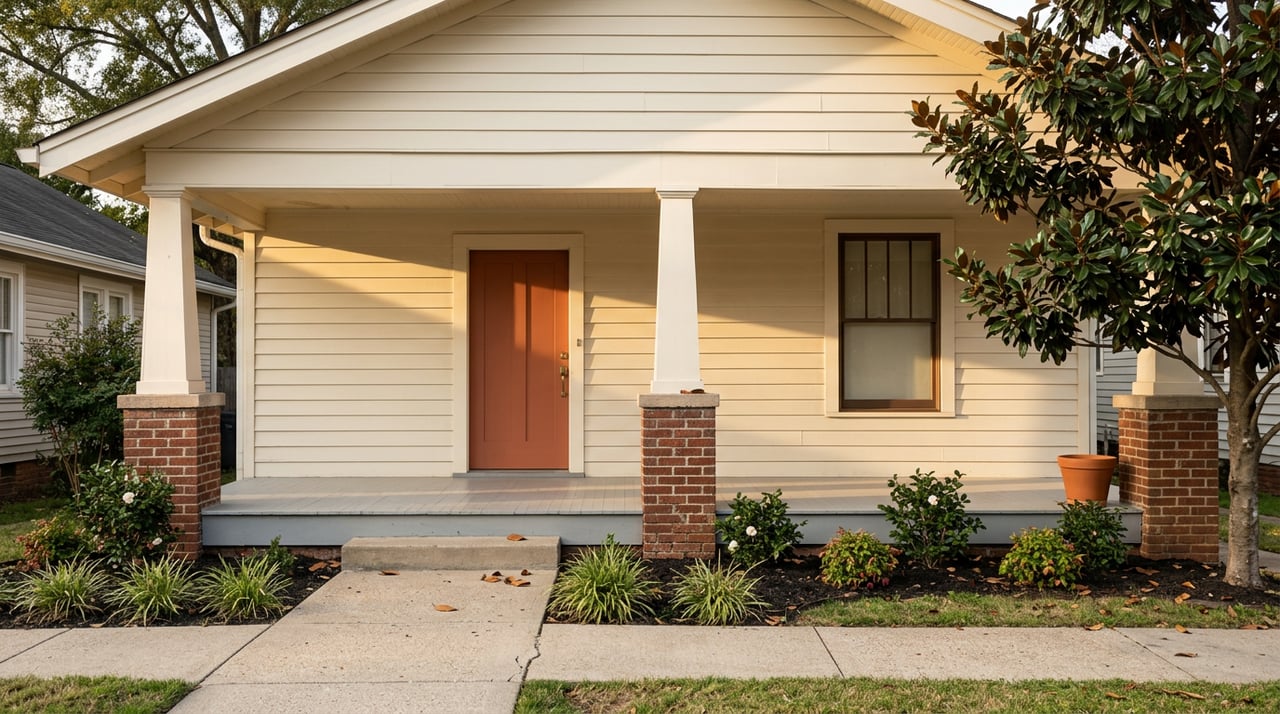
Walk through Tower District and you're mostly looking at pre-war bungalows, the kind of housing stock local plumbers point to when they talk about original supply lines and electrical service that predates modern panel standards. Fig Garden reads differently. Its established homes carry mature landscaping and age in the roof and drainage systems more than in the panel, which is why local property inspectors say Fig Garden inspections tend to focus on roof age, drainage, and exterior maintenance rather than the electrical questions that dominate a Tower District walkthrough. Head toward Woodward Park or the newer developments near Copper Avenue and Herndon, and the plumbing shifts to PEX throughout, a different generation of housing with different underwriting math.
This is why two Fresno homes can list at the same price and carry very different closing risk. A buyer comparing a Tower District bungalow to a Woodward Park ranch home isn't just comparing square footage and lot size. They're comparing how likely it is that an underwriter stalls their loan three weeks into escrow. Property inspectors who work across the city describe the split directly: Tower District inspections concentrate on foundations, electrical updates, and past renovation work, while inspections in newer North Fresno subdivisions focus more on workmanship, roof installation, and attic ventilation, because the systems underneath simply aren't the same age.
None of this means older Fresno homes are a bad buy. It means the panel deserves a conversation earlier in the process than most buyers or sellers give it.
What Getting Current Costs Right Now
A panel upgrade in Fresno isn't the multi-week ordeal some homeowners fear. As of early 2026, local contractor pricing for a standard panel upgrade runs roughly $850 to $4,000 depending on amperage and scope, with a similar range from other Fresno electricians once permitting and inspection are included. Most jobs are done in a single day, generally six to ten hours of work, since the main task is removing the old panel, installing a modern breaker-based unit, and coordinating the utility reconnect. The City of Fresno's Building and Safety division offers same-day express permits for electrical work, which keeps the paperwork from becoming its own bottleneck.
Some carriers have also started acknowledging Fresno's older housing stock as its own category rather than treating it as a liability across the board. Mercury, for instance, offers policies built specifically for the city's vintage and historic homes, including extended replacement cost coverage up to 150% of the dwelling limit, aimed at restoring an older home to its original condition rather than forcing a generic rebuild. That's a sign the market has room for these properties. It just requires the electrical system to clear the bar first.
Getting Ahead of It Before You List
For sellers of a pre-1970s Fresno home, the panel question is worth answering before a buyer's underwriter answers it for you.
- Find out what's actually in the box. A quick call to a licensed electrician can confirm the panel brand and amperage in under an hour, often for the cost of a service call.
- If it's FPE or Zinsco, get a quote now, not during escrow. Knowing the real number, not a guess, lets you decide whether to upgrade before listing or price the home with that cost in mind.
- Keep the permit paperwork if you've already upgraded. A closed permit and final inspection record is what an underwriter actually wants to see, not just a receipt.
- Disclose the panel type proactively. Buyers and their lenders will find out either way. Surfacing it early keeps the conversation about price and terms instead of a scramble at the finish line.
Buyers have a parallel job. During the inspection contingency period, ask specifically about panel brand and age, not just whether the electrical system "works." Loop in a lender who already knows how to route older Fresno properties through insurance underwriting, and talk to an insurance agent before you remove contingencies rather than after. If an upgrade turns out to be necessary, it's a negotiable line item, not a reason to walk from a house you otherwise want.
A Short FAQ
Does a standard home inspector check the panel brand? Most will note the panel type and general condition as part of a normal inspection, but identifying and flagging it as an insurance risk isn't their role. That determination comes from the carrier's own inspection or underwriting review.
Can a sale still close if the panel needs to be replaced? Often, yes. Many escrows work through it by having the seller complete the upgrade before closing, negotiating a credit so the buyer handles it right after, or, in some cases, getting a short-term binder from the carrier contingent on scheduled repair. The key is surfacing it early enough that there's time to choose.
Does replacing the panel do anything beyond satisfying the insurance company? It also resolves the underlying safety issue the carriers are reacting to, and it clears the way for future additions like EV charging or a heat pump system that an old panel likely couldn't support anyway.
If you're weighing a purchase in Tower District, Fig Garden, or anywhere else in Fresno's older housing stock, or you're a seller wondering whether your panel is about to become a closing issue, Christopher A Harris and the Harris Realty Group team can help you get ahead of it. Reach out for a free home valuation and a straight answer on what your specific property might face in underwriting before it ever hits the market.