Thinking about buying your first investment property in Visalia? It can be exciting to picture rental income and long-term equity, but the numbers need to work on paper before they work in real life. If you are just getting started, this guide will help you understand Visalia’s market, compare common property types, and screen deals more carefully so you can move forward with confidence. Let’s dive in.
Why Visalia Draws Investors
Visalia offers a practical entry point for smaller real estate investors who want to buy in the Central Valley. As of March 2026, Redfin reported a $402,000 median sale price, while Realtor.com showed a $425,000 median listing price and $1,910 median rent in the same period. Zillow’s average asking rent was $1,950 as of April 13, 2026, which gives you a rough starting point for evaluating income potential.
That said, this is not a market where you can rely on one simple rule of thumb. Based on local sale and rent data, Visalia’s rough gross annual rent-to-price ratio lands in the mid-5% range before expenses, which means careful underwriting matters. You can review current local market figures through Redfin’s Visalia housing market data and Realtor.com’s Visalia market overview.
Understand Visalia’s Market Mix
One reason Visalia appeals to first-time investors is that the housing stock leans toward smaller, easier-to-understand property types. According to the city’s housing inventory summary, 74.4% of housing units are detached single-family homes, while 11.0% are two-to-four-unit properties and 8.0% are in buildings with five or more units. In plain terms, most new investors here will likely be comparing a house, duplex, or small multifamily property instead of a large apartment complex.
Visalia also has a higher owner-occupied housing rate and higher housing values than Tulare County overall. The U.S. Census reports a 61.1% owner-occupied rate and $371,500 median owner-occupied value in Visalia, compared with 58.5% and $330,100 countywide. You can also see that Census QuickFacts for Visalia shows local median gross rent at $1,490, which is useful as a more conservative benchmark than active asking rents.
Start With Property Types That Fit Beginners
Single-family rentals
A single-family home is often the simplest place to start. These properties are usually easier to finance, easier to resell, and easier to compare using neighborhood sales data. In a market like Visalia, that resale flexibility can matter if your plans change later.
Single-family homes may also give you access to future value-add options, especially if the lot and zoning support an accessory dwelling unit. But because the citywide rent-to-price relationship is not especially high, you will want to be cautious about overpaying based on best-case rental projections.
Duplexes and small multifamily
A duplex or small multifamily property can offer more than one income stream, which may help reduce vacancy risk. If one unit is empty, the property may still generate income from the other unit. For many first-time investors, that can make the numbers more resilient.
At the same time, these properties often require more detailed analysis. You need to review current rents, utility setup, deferred maintenance, and permit history carefully. Older two-to-four-unit properties can look attractive upfront but become expensive quickly if systems have not been updated.
Homes with ADU potential
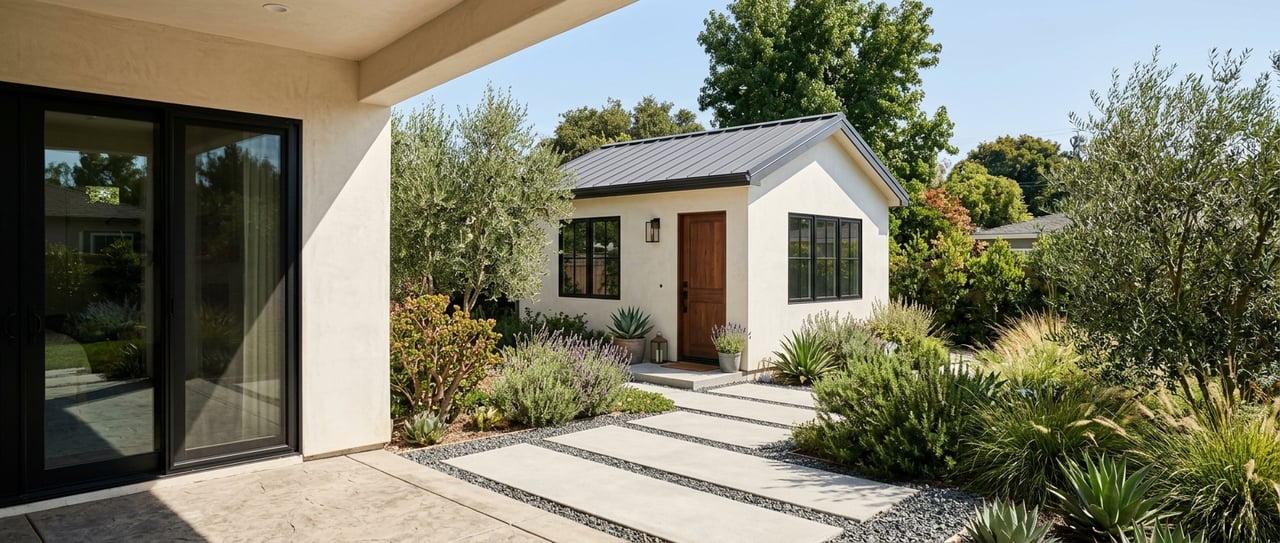
Visalia has become more relevant for investors interested in ADUs. The city’s Planning Division notes that a new ADU ordinance was adopted on January 21, 2025, and the city now offers a permit-ready ADU program with three pre-approved plans: a 490-square-foot studio, a 498-square-foot one-bedroom, and a 918-square-foot two-bedroom.
If you are buying a property inside Visalia city limits that is residentially zoned and already has, or will have, a single-family home or duplex, an ADU may create additional rental income on the same property. That does not automatically make every deal work, but it does mean you should ask whether a property has realistic ADU potential before you rule it out.
Look Beyond Citywide Averages
One of the biggest mistakes new investors make is using one average for the entire city. In Visalia, pricing varies quite a bit by area. Realtor.com’s neighborhood snapshots show median listing prices around $298,550 in Central Visalia and about $536,415 in West Visalia, with other areas such as Southwest Visalia around $390,500 and East Visalia around $408,500.
That spread matters because investment performance is tied to the specific block, property condition, and rent range, not just the city headline. A home that looks affordable in one part of Visalia may need major repairs, while a more expensive property elsewhere may offer stronger tenant demand or better long-term resale liquidity. This is why neighborhood-level comps are more useful than broad city averages.
Use Three Rent Benchmarks
Before you make an offer, test your projected rent against multiple sources instead of relying on the highest asking number you can find. In Visalia, you can start with three practical rent benchmarks:
- Active asking rent: Zillow reported an average asking rent of $1,950
- Market median rent: Realtor.com reported a median rent of $1,910
- Conservative local baseline: Census QuickFacts reported median gross rent of $1,490
You can add a fourth benchmark for unit-specific planning through HUD’s FY 2026 Fair Market Rent data, which lists:
- Studio: $1,116
- 1-bedroom: $1,123
- 2-bedroom: $1,474
- 3-bedroom: $2,028
- 4-bedroom: $2,393
The goal is not to pick the highest number. The goal is to see whether the property still works if rents come in lower than expected.
Know the Difference Between Gross and Net
Gross rent is just the top-line income. It is not your return.
When you analyze a property, subtract the real costs of ownership before deciding whether the deal makes sense. That usually includes:
- Property taxes
- Insurance
- Repairs and ongoing maintenance
- Vacancy allowance
- Capital reserves
- HOA dues, if any
- Property management
- Loan payments and financing costs
This step is especially important in Visalia because the rough gross rent-to-price ratio is only in the mid-5% range. A property can look promising at first glance and still underperform once you account for normal expenses.
Check Condition and Permit History
In a first investment purchase, condition matters just as much as price. The city’s Code Enforcement Division handles issues such as substandard living conditions, unsafe structures, and work done without required permits. That makes due diligence especially important when you are looking at older homes, garage conversions, or additions.
Before you write an offer, pay close attention to:
- Roof age and condition
- HVAC performance
- Plumbing and sewer issues
- Electrical updates
- Signs of deferred maintenance
- Unpermitted additions or conversions
A low purchase price can lose its appeal quickly if you inherit major repairs or code issues after closing.
Understand Local Rules for Rental Strategy
Not every rental plan is equally simple to execute. In many cases, long-term rental strategies are easier for beginners to understand and manage than short-term rentals.
Visalia defines a short-term rental as lodging for stays of less than 30 consecutive days. The city requires an STR permit, a valid business tax certificate, monthly transient occupancy tax remittance, and compliance with the city’s STR ordinance. You can review these requirements on the city’s short-term rental page.
For many first-time investors, this means a long-term rental or an ADU-based strategy may be simpler to underwrite and operate. If you are considering any property for STR use, make sure you confirm the local rules before building your numbers around that plan.
Factor In California Landlord Rules
State law also affects your investment math. According to the California Attorney General’s landlord-tenant guidance, the Tenant Protection Act limits rent increases for most residential tenants to 10% total or 5% plus inflation, whichever is lower, over 12 months. The same guidance explains that just-cause eviction rules generally apply after 12 months of tenancy for most covered units.
That resource also states that, for most residential rental properties, security deposits are capped at one month’s rent and generally must be returned within 21 days with an itemized statement. Some properties are exempt from parts of the Tenant Protection Act, including certain single-family homes not owned by corporations or REITs, some newer units, and certain owner-occupied duplex situations. Still, the key takeaway is simple: your rental strategy should match both the local market and the state rules that govern how the property can be operated.
Build a Simple Deal-Screening Process
If you are new to investing, a simple framework can help you avoid emotional decisions. Before making an offer, walk through these questions:
- What is the realistic rent range? Use asking rents, Census data, and HUD fair market rent.
- What does the property need right away? Estimate near-term repairs, safety issues, and deferred maintenance.
- Is the use allowed? Confirm zoning, permit history, ADU options, and any STR rules that apply.
- What are the true monthly expenses? Include taxes, insurance, reserves, vacancy, and management.
- How strong is the exit strategy? Think about resale appeal, neighborhood comps, and future buyer demand.
This kind of disciplined screening can help you spot the difference between a property that merely looks affordable and one that actually supports your goals.
How Local Guidance Helps
When you are buying an investment property in Visalia, local knowledge can save you time and reduce avoidable risk. A local agent can help you compare neighborhood-level comps, evaluate current list prices against realistic rent potential, and flag issues that may affect value or usability.
That is especially helpful in a market where signals vary by source, property type, and area of town. Visalia can be a strong market for practical, cash-flow-focused investors, but the best opportunities usually come from careful deal-by-deal analysis, not broad assumptions.
If you are thinking about buying your first investment property in Visalia, Harris Realty Group can help you narrow your options, understand the numbers, and move forward with a clear local strategy.
FAQs
What is a good first investment property type in Visalia?
- For many first-time investors, a single-family home or duplex is the most practical place to start because those property types are common in Visalia and usually easier to evaluate than larger multifamily buildings.
How should you estimate rent for an investment property in Visalia?
- Use multiple benchmarks, including active asking rents, broader market rent data, Census rent figures, and HUD fair market rent, so your projections are not based only on the most optimistic number.
Can you build an ADU on an investment property in Visalia?
- Possibly, if the property is within Visalia city limits, is residentially zoned, and has an existing or proposed single-family home or duplex, but you should confirm current city requirements before moving forward.
Are short-term rentals allowed for investment properties in Visalia?
- Yes, but they are regulated and require a short-term rental permit, business tax certificate, monthly transient occupancy tax remittance, and compliance with the city’s ordinance.
What expenses should you include when analyzing a Visalia rental property?
- In addition to the mortgage, you should account for property taxes, insurance, maintenance, vacancy, capital reserves, HOA dues if applicable, and property management when estimating true return.