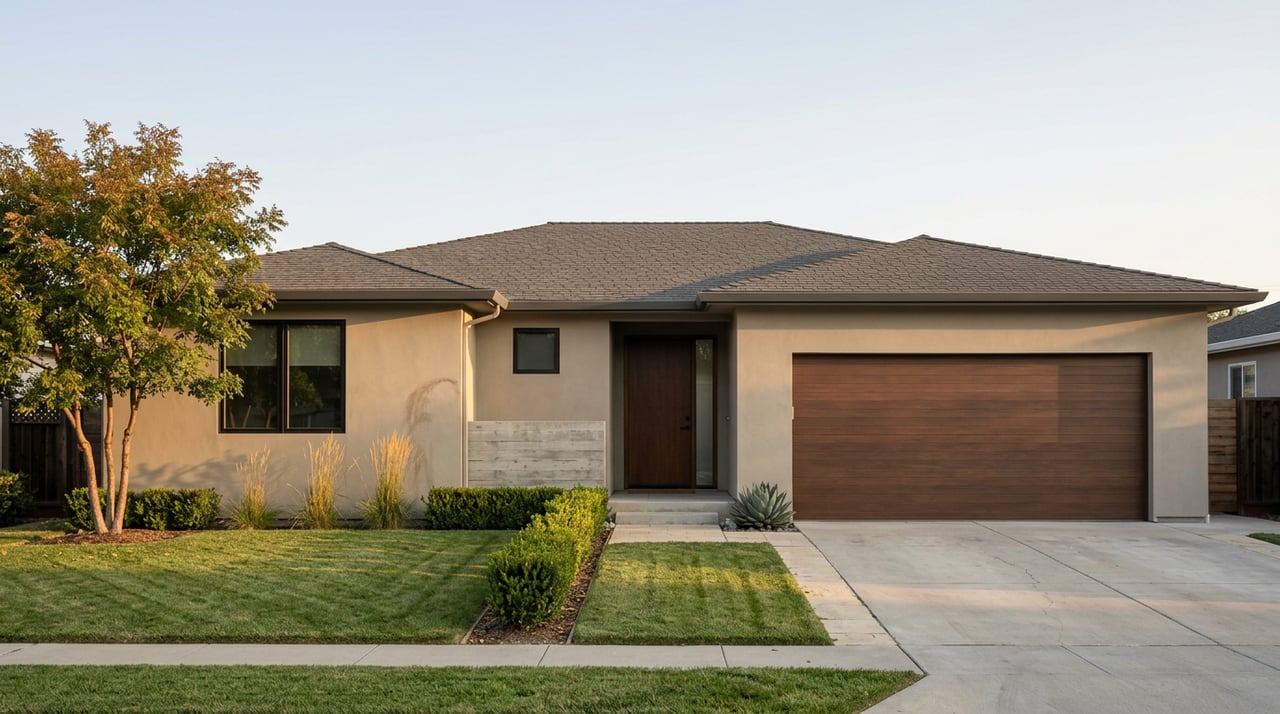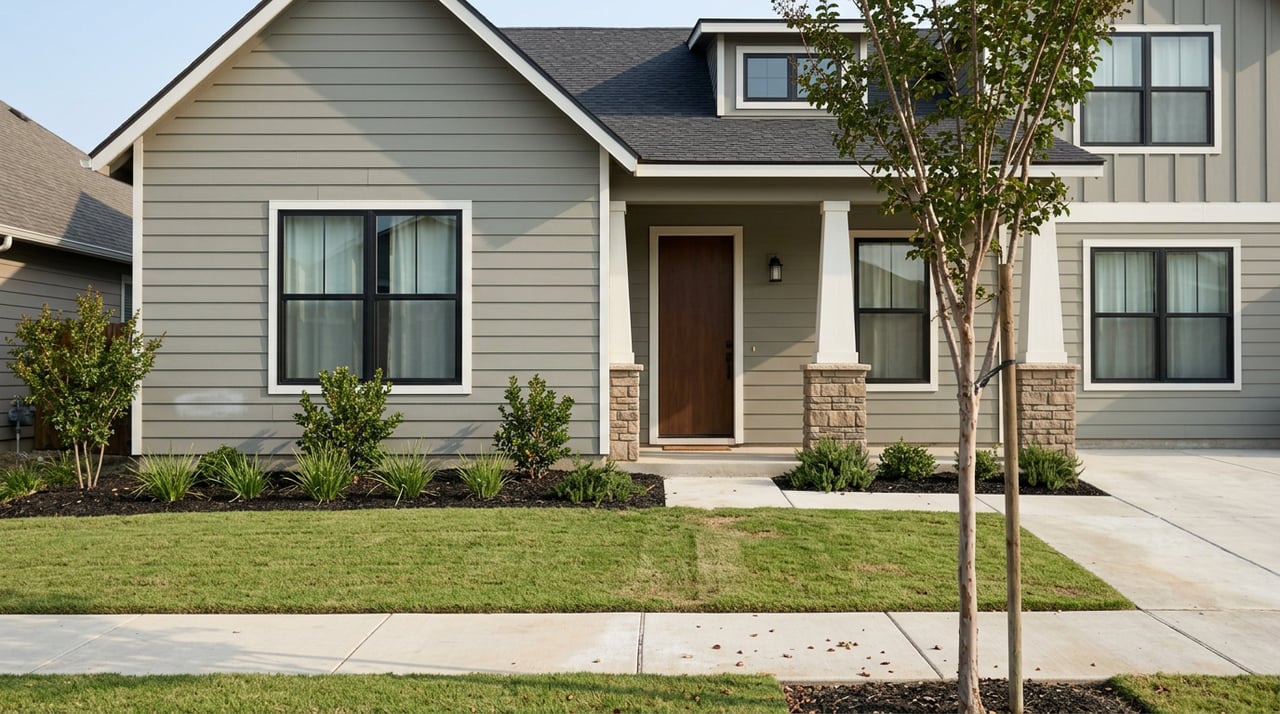
A listing for a custom new build in Southwest Visalia recently pitched itself on an unusual detail. Tucked near Cottonwood Creek Elementary and the new shopping and dining strip along Visalia Parkway, the property description called out that the community feels like its own private enclave, then added, almost as an aside, that it comes without an HOA.
That phrasing is a tell. Nobody markets the absence of something buyers don't already expect to find. If a builder thinks "no HOA" is worth a line in the listing, it's because HOA dues, and usually the special tax that rides alongside them, have become the default across most of the new construction going up on the other side of town.
Northwest Visalia has been building fast. D.R. Horton has multiple active Tradition Series communities in the area, including Pratt Estates, Victory Oaks, and Shepherds Ranch, along with its smaller-footprint Express Series community, Owenglen, and Sycamore Ranch has been adding floorplans on the northwest side as well. San Joaquin Valley Homes has its own community, Andover Place, opening elsewhere in Visalia this summer. Almost all of that inventory sits inside a Community Facilities District, the legal structure behind what most Californians call Mello-Roos.
The gap between a new build in one of these communities and a resale home across town isn't really the sticker price. It's the second bill that shows up after closing, one that doesn't behave like a normal property tax and can complicate a loan long before either buyer picks out a countertop.
Where This Tax Actually Comes From
Proposition 13 capped California property taxes at 1 percent of assessed value in 1978 and limited annual increases to 2 percent, which protected existing homeowners but left cities and counties short on cash to build roads, sewers, and schools in fast-growing areas. The Mello-Roos Community Facilities Act of 1982 was the legislature's fix. It lets a city, county, or school district form a Community Facilities District, sell bonds to pay for the infrastructure a new subdivision needs, and then bill the properties inside that district a special tax to pay the bonds back.
Here's the part most buyers never think to ask about. A CFD can be formed with a two-thirds vote of property owners, but only if there are fewer than twelve registered voters living within the proposed boundary at the time. New subdivisions almost always qualify, since the land is still raw when the district is created. In practice, the vote approving your future tax bill was often cast by the developer alone, years before a single house was framed.
Why It Doesn't Behave Like a Normal Tax
Your base property tax is capped and predictable. A CFD special tax is neither. It isn't based on assessed value, so it doesn't shrink as a percentage of your payment if the home appreciates. It stays fixed or moves according to the district's own formula, regardless of what the market does. Many CFDs also carry a stated maximum tax that a builder is legally allowed to charge on a given lot, even when the current bill is lower, which means the number on your first tax statement isn't necessarily the ceiling.
A home priced at a 1.25 percent effective tax rate and one priced at 1.8 percent aren't the same monthly payment, even before either buyer has chosen a countertop.
That difference compounds. Statewide, CFD assessments on new subdivisions have ranged from a few hundred dollars a year in smaller, older districts to more than $10,000 annually in some large, fast-growing developments, according to mortgage industry reporting earlier this year. Visalia's Northwest communities sit somewhere in that range depending on the specific district, the bonds it issued, and how the tax was apportioned across lots. The only way to know your number is to pull it for your specific parcel, not a neighborhood average.
The Underwriting Wrinkle
Lenders don't treat this as a rounding error. The full cost of a Mello-Roos assessment gets folded into your debt-to-income ratio at underwriting, the same as your base tax and insurance. If your pre-approval used a generic tax estimate and the actual rate on your chosen lot turns out higher once the community's district is finalized, that gap can show up during the build and jeopardize the loan you thought you already had.
This is exactly why the disclosure document matters more than most buyers assume. In a new construction purchase, the builder is required to provide a Notice of Special Tax before you sign the purchase agreement, and it's supposed to spell out both the current tax and the maximum. Read it before you're deep enough into the process that walking away feels expensive. California's Civil Code also requires a seller reselling a home inside a CFD to make a good faith effort to obtain that same Notice of Special Tax for the buyer, so the obligation to surface this number doesn't disappear once a house changes hands the first time.
The Foreclosure Clock Most Buyers Don't Know About
Here's the detail that separates a CFD tax from an ordinary bill you can let slide for a season. Standard county property tax delinquency comes with roughly a five-year window before the county can move toward foreclosure. A CFD special tax doesn't offer that runway. Once the tax goes unpaid for more than 90 days, the district has the right, and if bonds were issued, the obligation, to begin foreclosure, and the delinquent owner is on the hook for collection costs and penalties on top of the original bill.
That single fact reframes how seriously to treat this line item. It isn't a fee you can quietly fall behind on during a rough month the way you might manage a slow credit card payment. It's a lien with a much shorter fuse than the tax bill most homeowners are used to.
What to Ask Before You Sign in Any of These Communities
If you're looking at a lot in Pratt Estates, Victory Oaks, Shepherds Ranch, Owenglen, Sycamore Ranch, Andover Place, or any other active new-construction community in Visalia, get these answers in writing before you sign anything:
- The Notice of Special Tax for your specific lot, not a community-wide average
- Whether the district's bonds have already been issued or are still pending
- The maximum tax allowed on the lot compared to what's currently billed
- How many years remain on the assessment, and whether it's separate from any HOA dues
- What the tax actually funds, since roads, schools, and parks can carry different payoff timelines
What This Means If You're Comparing Neighborhoods
The San Joaquin Valley Council of Governments notes plainly that a CFD can increase housing costs relative to areas without one, and that some buyers are put off once they realize they're paying for amenities they may not use. That's worth sitting with if you're weighing a Northwest Visalia new build against an older home in an established part of the city. Most of Visalia's existing neighborhoods were built before this financing tool became standard practice, which is a real part of why that Southwest Visalia listing could turn a missing HOA into a selling point rather than an oversight.
There's also a resale angle worth thinking about now, even if selling is years away. A high CFD assessment can narrow your future buyer pool or force a price adjustment relative to comparable homes that don't carry one. The tax you're evaluating today as a buyer becomes a line item the next buyer evaluates too.
None of this makes new construction the wrong call. It makes the sticker price the wrong number to compare. If you're weighing a build in one of Visalia's Northwest communities against a resale home closer to downtown, the honest comparison starts with the Notice of Special Tax, not the listing price, and it accounts for a foreclosure timeline that behaves nothing like your regular tax bill.
If you want help pulling that number for a specific lot or comparing it against what a resale home nearby would actually cost you month to month, Harris Realty Group can walk through the numbers with you before you sign anything. Get a Free Home Valuation and let's put the real comparison on the table.